

25+ Years of Search Engine Optimization Experience
Why Voice Search SEO & Featured Snippet Optimization Are Non-Negotiable in 2026
Voice search SEO and featured snippet optimization aren’t just trends—they’re the new baseline for digital visibility and lead generation.
Here’s why:
- Voice adoption is accelerating: 27% of online users globally use voice search on mobile, with 50% of smartphone users engaging daily (Google, 2024-2025)
- Position zero dominates voice: 40.7% of voice search results are pulled from featured snippets, while 75% come from pages ranking in the top 3 (Backlinko, 2018)
- Zero-click searches are the norm: 58.5% of Google searches end without any click, with users getting answers from AI Overviews, featured snippets, and voice assistants—never visiting your site (SparkToro, 2024)
But here’s the catch:
If you don’t optimize for voice and featured snippets, you’re missing the #1 source of organic visibility, trust, and conversions in the age of AI search.
This impacts everyone:
- Local service businesses (law firms, dentists, contractors)
- E-commerce brands
- SaaS and technology companies
- Healthcare and regulated industries
- National and global enterprises
The stakes:
- Become “the answer” in your niche—or get replaced by a competitor who is.
- Win position zero and voice answers, or lose out on the fastest-growing source of leads.

The New Foundation of Digital Visibility
What is Voice Search SEO?
Voice search SEO is the process of optimizing your content, technical setup, and structured data so that voice assistants (Google Assistant, Siri, Alexa, Cortana) select your answers when users ask questions out loud.
How it works:
- Voice assistants use NLP (natural language processing) to interpret queries
- They favor concise, direct answers and conversational content
- Structured data is critical: FAQ, HowTo, QAPage, LocalBusiness schema
- Local intent dominates: “near me,” “best [service] in [location]”
Key features:
- Focuses on conversational, long-tail, and intent-driven queries.
- Prioritizes direct, clear, and concise answers.
- Demands mobile-first and speed-optimized sites.
Why it matters: Voice search is now mainstream. Users expect instant, spoken answers—especially on mobile and smart speakers. If your site isn’t “AI-readable,” you’re missing out.
But here’s the catch—if you’re not using schema or answering real questions, you’re invisible to voice assistants.
Want to understand how technical factors like crawlability and structured data impact voice and snippet results? Explore our Technical SEO guide for actionable tips on site architecture and markup.
What Is Featured Snippet Optimization (Position Zero SEO)?
Featured snippet optimization is the art and science of structuring your content to win the “answer box” at the very top of Google’s search results—position zero. This is the content that voice assistants most often read aloud.
Types of featured snippets:
- Paragraph: Direct, 40–60 word answers (best for voice)
- List: Steps, recipes, rankings (ordered/unordered)
- Table: Data, pricing, comparisons
- Video: Short, answer-focused video clips
Position zero SEO:
- Makes your brand the default answer for both typed and spoken queries.
- Delivers maximum authority, trust, and zero-click traffic.
Let’s break it down: Traditional SEO aimed for the #1 blue link. Now, the real win is being the answer, not just an option.
What the Latest Research Reveals About Search Behavior
The Data: Voice Search & Featured Snippet Trends
- Mobile voice searches are 3x more likely to have local intent, with 76% of smart speaker users conducting local searches weekly (Google, 2024)
- Pages with FAQ schema are 3.2x more likely to appear in Google AI Overviews, the dominant answer format in 2025 (Frase.io, 2024)
- 40%+ of informational queries trigger snippets
- Zero-click searches = 65% of all search activity (SparkToro)
- Question-based queries starting with ‘why’ trigger featured snippets 77.6% of the time, making question-focused content critical (Semrush, 2024)
Here’s what you need to know next: The competition for position zero is fierce—and the playbook is evolving fast.
Types of Featured Snippets (and How to Target Each)
Paragraph Snippet
- What it is: A direct, 40–60 word answer.
- How to win: Place the question as a heading (H2/H3), answer immediately below, keep it concise.
- Best for: Voice search, definitions, quick facts.
List Snippet
- What it is: Ordered or unordered steps, recipes, or rankings.
- How to win: Use numbered or bulleted lists, especially for “how to” and process queries.
- Best for: Tutorials, recipes, multi-step processes.
Table Snippet
- What it is: Data, comparisons, or pricing in tabular format.
- How to win: Structure data in HTML tables, use clear headers.
- Best for: Feature comparisons, pricing, schedules.
Video Snippet
- What it is: Short video answers, usually from YouTube.
- How to win: Add descriptive titles, timestamps, and schema to your videos.
- Best for: Visual or how-to queries.
Pro tip: Use schema markup and clear formatting to target the right snippet type for your content.
If you’re focused on visual content—like images and video snippets—our Visual Search Optimization page covers best practices for image SEO, alt text, and discoverability in visual search.
Essential Tactics to Win Voice Answers and Dominate Position Zero
Core Strategies for Voice Search SEO
Write for Conversation, Not Keywords
Voice search is fundamentally different from typed queries. When someone types, they might search “best Italian restaurant Chicago.” When they speak, they ask “What’s the best Italian restaurant near me?” or “Where should I go for authentic pasta in Chicago?” Your content needs to mirror this natural language.
Start by identifying the actual questions your audience asks—use tools like Answer the Public, Google’s “People Also Ask,” and your own customer service logs. Then structure your content around these conversational queries. Instead of targeting the keyword “plumbing repair,” create content that answers “How do I fix a leaking faucet?” or “What should I do if my drain is clogged?” Use complete sentences, natural phrasing, and anticipate follow-up questions. Voice assistants favor content that reads like a helpful conversation, not a keyword-stuffed sales pitch.
Example:
- ❌ Wrong: “Emergency plumbing services available 24/7 for pipe burst, leak repair, drain cleaning.”
- ✅ Right: “If your pipe bursts at 2 AM, you need a plumber who answers the phone immediately. Our emergency plumbing team is available 24/7 to handle urgent repairs like burst pipes, major leaks, and backed-up drains.”
Key implementation steps:
- Research question-based queries using Answer the Public, AlsoAsked, and Google Trends
- Mirror the phrasing found in “People Also Ask” sections for your target topics
- Use natural, question-based headings throughout your content: “How do I…?”, “What’s the best way to…?”, “Can you…?”
- Anticipate follow-up questions to encourage Google to pull multiple answers from your page
Structure Content for Featured Snippets with Schema Markup
Winning position zero requires both content structure and technical implementation working in harmony. Your content structure determines whether Google can extract a clean answer, while schema markup tells Google exactly what type of content you’re providing and how it should be interpreted by voice assistants.
Content Structure Best Practices:
- Place your target question as an H2 or H3 heading
- Answer it immediately in 40–60 words (the sweet spot for voice answers)
- Follow with supporting details, examples, or step-by-step instructions
- Use numbered lists for “how-to” content and tables for comparisons or data
Technical Implementation:
Mark up your Q&A content with FAQ schema, step-by-step processes with HowTo schema, and ensure your structured data is error-free using Google’s Rich Results Test. Pages with proper schema are 2.7x more likely to win featured snippets. This isn’t optional—it’s the technical foundation that makes your content voice-search ready.
Example Structure:
H3: How long does it take to recover from wisdom teeth removal?
Most people recover from wisdom teeth removal in 3–7 days. You’ll likely feel back to normal within a week, though complete healing of the extraction site can take 2–3 weeks.
During recovery:
- Days 1-2: Expect swelling and discomfort, stick to soft foods
- Days 3-4: Swelling peaks then decreases, pain should lessen
- Days 5-7: Most daily activities can resume, continue gentle care
- Weeks 2-3: Full tissue healing, can return to all normal foods
Add FAQ schema to this content, and you’ve created snippet-optimized, voice-search-ready content that demonstrates expertise while remaining accessible to both users and AI assistants.
Want to understand how technical factors like crawlability and structured data impact voice and snippet results? Explore our Technical SEO guide for actionable tips on site architecture and markup validation.
Dominate Local Voice Search
Mobile voice searches are 3x more likely to have local intent. “Near me” queries, business hours questions, and location-specific service searches are voice search gold—but only if you’ve optimized correctly. When someone asks their phone “Where’s the nearest emergency dentist?” or “Is there a hardware store open now?”, Google pulls from a combination of your Google Business Profile, local schema markup, and on-site content to determine if you’re the right answer.
Local Voice Search Checklist:
- Claim and fully optimize your Google Business Profile with accurate hours, services, photos, and regular posts
- Add LocalBusiness schema to your website with NAP (Name, Address, Phone), hours, service areas, and payment methods
- Create location-specific FAQ content: “Do you offer emergency service in [neighborhood]?” “What are your hours on weekends?”
- Build and maintain consistent citations across directories (Yelp, BBB, industry-specific directories)
- Actively collect and respond to Google reviews—voice assistants often cite review content when answering local queries
The difference between appearing in voice results and being invisible often comes down to these local signals. A law firm with complete LocalBusiness schema and 50+ recent reviews will dominate voice answers for “best personal injury lawyer near me” over a competitor with thin local optimization, even if their traditional SEO is strong.
Speed, Mobile Optimization, and Multi-Intent Content
Voice searches happen on mobile devices and smart speakers—both demand fast, frictionless experiences. A slow site kills your voice search chances before you even start. Google’s research shows that 53% of mobile users abandon sites that take longer than 3 seconds to load, and voice assistants have even less patience. If your page takes 5+ seconds to load, you’re essentially invisible to voice search regardless of how good your content is.
Technical Requirements for Voice Search:
- Mobile-first design with responsive layout and thumb-friendly navigation
- Page speed under 3 seconds (compress images, minimize code, leverage browser caching, use a CDN)
- Structured data implementation for all key content types (FAQ, HowTo, LocalBusiness, Product)
- HTTPS security (required for voice assistants to trust and cite your content)
- Clean, semantic HTML that’s easy for voice assistants to parse
Multi-Intent Content Strategy:
Structure your content to answer multiple related questions on a single page. If someone asks “How do I fix a leaking faucet,” they often also want to know “What tools do I need?” and “When should I call a plumber instead?” By answering these related questions comprehensively on one page, you increase your chances of winning multiple snippets and becoming the default voice answer for an entire topic cluster.
Real-world scenario example:
Q: What should I do if my air conditioner stops working at night?
A: If your AC stops working after hours, first check your thermostat settings and circuit breaker—these account for 30% of “broken” AC calls. If the breaker is tripped, reset it once. If the issue persists or the breaker trips again, call a 24/7 emergency HVAC service in your area, as this indicates a serious electrical or compressor issue that requires immediate professional attention.
This answer addresses the immediate question while anticipating follow-up needs (troubleshooting steps, safety concerns, when to call for help), making it more likely to be selected as the complete voice answer.
For technical optimization deep-dives—including Core Web Vitals, site architecture, and schema validation—explore our Technical SEO guide. For content strategies that scale across multiple intents and keyword clusters, see our Content Marketing & SEO resource.
The Proven Framework for Featured Snippet Success
Step-by-Step Guide: How to Win Featured Snippets
1. Identify Snippet Opportunities
- Use SEMrush, Ahrefs, Moz, or Google Search Console to find queries triggering snippets.
- Target "People Also Ask" questions for your niche.
2. Structure Your Content
- Place the target question as a heading (H2/H3).
- Write a direct, 40–60 word answer immediately below.
- Use lists or tables if appropriate.
3. Implement Schema Markup
- Add FAQ, HowTo, QAPage, and other relevant schema types.
- Use Technical SEO best practices for markup validation.
4. Add FAQ Sections
- At the end of every key page, answer real user questions.
- Use data from "People Also Ask," Answer the Public, and your own analytics.
5. Optimize for "People Also Ask"
- Answer related questions to capture multiple snippets.
- Use conversational subheadings and answer formats.
6. Refresh Content Regularly
- Snippet ownership changes—update your answers and schema quarterly.
- Monitor for new "zero-click" opportunities.
For e-commerce brands, combining snippet optimization with robust E-Commerce SEO tactics—like product schema, customer Q&A, and review markup—can dramatically boost visibility in shopping-related voice answers.
7. Win and Defend Snippets
- Regularly audit your snippet performance and identify content gaps.
- Refresh and improve underperforming answers.
- Monitor competitors and adapt your content to stay ahead in the snippet race.
Industry-Specific Scenarios & Case Studies
Local Service Business (Law Firm Example)
Challenge:
A personal injury law firm in Atlanta wanted to appear in voice answers for "best injury lawyer near me" and "how to file a claim after a car accident."
Process:
- Added FAQ and LocalBusiness schema to all service pages.
- Created Q&A content targeting common legal questions.
- Updated their Google Business Profile and encouraged client reviews.
Outcome: The firm won the featured snippet and became the default voice answer for several high-intent queries, resulting in a 32% increase in direct calls and consultation requests.
E-Commerce Brand
Challenge:
An online retailer wanted their product pages to be read aloud by voice assistants for "best running shoes for flat feet" and similar queries.
Process:
- Marked up each product page with Product, Review, and FAQ schema.
- Added concise Q&As and comparison tables.
- Optimized descriptions for conversational, buyer-focused queries.
Outcome: Products surfaced in voice search and Google Shopping answer boxes, driving a 27% increase in conversion from zero-click and voice-driven traffic.
SaaS/Tech Company
Challenge:
A SaaS provider wanted to win position zero for "best project management software for remote teams."
Process:
- Published comparison guides and "how-to" content with FAQ/HowTo schema.
- Used scenario-based Q&A and long-tail queries.
- Monitored "People Also Ask" and voice results to adapt content.
Outcome: Earned featured snippets for several high-value queries and was cited by Google Assistant in voice answers, boosting demo signups by 18%.
SaaS and tech companies can maximize their snippet and voice search presence by pairing Q&A content with the analytics insights from our SEO Analytics & Reporting spoke—ensuring you measure what matters and refine your strategy for continuous improvement.
Healthcare & Regulated Industries
Challenge:
A multi-location dental practice wanted to dominate voice search for "emergency dentist near me" and "toothache relief" queries while maintaining HIPAA compliance and medical accuracy in all content.
Process:
- Marked up all practitioner bios with Person and MedicalOrganization schema, including credentials, specialties, and accepted insurance
- Created medically-reviewed FAQ content addressing common urgent care questions ("What should I do about a knocked-out tooth?" "When is tooth pain an emergency?")
- Implemented LocalBusiness schema for each location with precise service areas, emergency hours, and contact methods
- Developed HIPAA-compliant review collection system that encouraged patient feedback without requesting health information
- Cited authoritative medical sources (ADA, CDC) for treatment recommendations to build E-E-A-T signals
Outcome: The practice became the default voice answer for emergency dental queries in their service area, appearing in 60% of relevant local voice searches. Emergency appointment requests increased 41% year-over-year, with patients specifically mentioning "Google told me to call you" during intake.
Quick Fixes That Prevent You From Being Invisible to AI
Common Mistakes, Troubleshooting & Recovery
Common Mistakes & How to Fix Them
❌ Ignoring Schema Markup
✅ Fix: Audit your site and add FAQ, HowTo, and QAPage schema to all relevant pages.
❌ Writing for Keywords, Not Questions
✅ Fix: Use conversational language and answer real user questions.
❌ Neglecting Page Speed & Mobile
✅ Fix: Compress images, streamline code, and use responsive design.
❌ Outdated Answers
✅ Fix: Set quarterly reminders to review and refresh content.
❌ Skipping Local Optimization
✅ Fix: Keep your Google Business Profile, citations, and review strategy current.
What to Do If You Lose a Snippet or Voice Answer
Losing position zero or a valuable voice answer can feel like a setback—but it’s usually recoverable with a proactive approach:
- Check Your Schema Markup: Use Google’s Rich Results Test to ensure your FAQ, HowTo, and other schema types are still valid and error-free.
- Refresh Your Content: Update answers, stats, and examples. Google and voice assistants reward freshness.
- Monitor Competitors: See who replaced you. Analyze their snippet and adapt your format, clarity, or depth.
- Update Reviews & Local Signals: For local queries, new reviews and accurate Google Business Profile data can help you regain voice prominence.
- Track in Google Search Console: Use the “Search Appearance” filter to monitor when you gain or lose featured snippets and rich results.
Pro tip: Set up monthly snippet audits and use alerts from SEMrush/Ahrefs to stay ahead of changes.
Accessibility: Bonus Authority & Trust
Optimizing for voice search and featured snippets also makes your site more accessible for users with disabilities. Clear, structured answers help screen readers and assistive tech, improving usability for everyone and boosting trust with both users and search engines.
Track, Analyze, and Optimize Your Voice Search and Snippet Performance
Measuring Success: Analytics & Reporting
Google Search Console:
- Track impressions, clicks, and ranking for snippet-triggering queries.
SEMrush/Ahrefs/Moz:
- Monitor snippet wins/losses and new opportunities.
Google Business Profile Insights:
- See how often your business is surfaced for voice and local queries.
Zero-Click & Voice Traffic:
- Use analytics to estimate traffic from zero-click sources and voice assistants.
Set Up Alerts:
- Get notified when you gain or lose a featured snippet so you can act fast.

Our Voice Search SEO & Featured Snippet Optimization Services
We’ve been helping businesses dominate search since the early days of the internet. With 25+ years of experience and Google Partner status, we understand not just how to optimize for traditional rankings—but how to become the default answer that voice assistants read aloud and featured snippets display at position zero.
In 25 years of SEO, we've never seen a shift this transformative. When 40% of voice search answers come from featured snippets and 65% of searches end without a click, the rules have fundamentally changed. If you're not winning position zero, you're losing customers to competitors who are.
Frequently Asked Questions
What's the difference between voice search SEO and traditional SEO?
Voice search SEO focuses on conversational, intent-driven queries and structured data to win voice and zero-click answers, while traditional SEO targets keyword rankings and blue links.
How do I know if my content is optimized for voice and snippets?
Test your site with voice assistants, use schema markup, and monitor zero-click and featured snippet queries in Google Search Console.
How often should I update my content for voice search?
At least quarterly—algorithms and snippet ownership change frequently.
What schema types matter most?
FAQ, HowTo, QAPage, LocalBusiness, and Product schema are key for voice and snippet SEO.
Can voice search SEO help my local business?
Absolutely—local schema, reviews, and Google Business Profile optimization are crucial for AI-powered local answers.
How do I handle negative or outdated info in voice answers?
Regularly update your content, encourage positive reviews, and address inaccuracies with new, authoritative content.
View Our Portfolio
See examples of our web design work. Our portfolio showcases the breadth of our experience and the quality of our in-house creative capabilities.














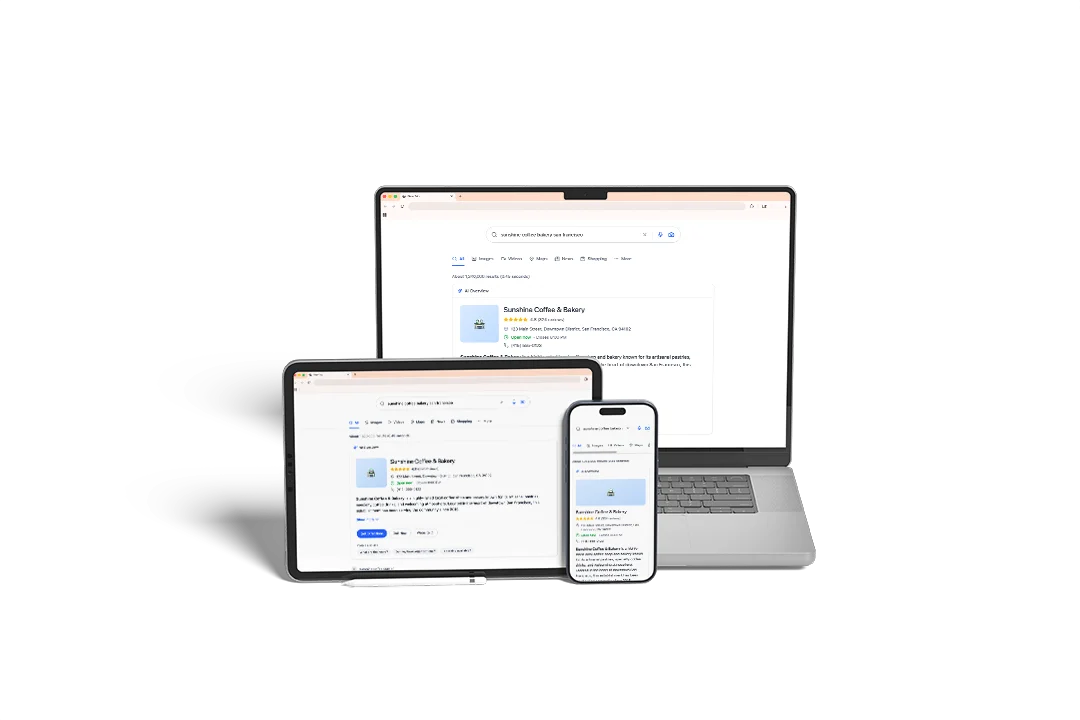
Ready to win position zero, dominate voice search, and future-proof your digital presence?
For over 25 years, Advertising Avenue has been helping businesses stay ahead of digital marketing shifts—and voice search optimization is the defining challenge of 2026. We’ve optimized sites for businesses across the nation and internationally, from small local companies to established enterprises.
Your customers are asking voice assistants right now. They’re using Google Assistant, Siri, and Alexa to find businesses like yours, compare options, and make buying decisions. If your content isn’t optimized for voice search and featured snippets, they’re hearing your competitors’ answers instead.
Let’s discuss your Voice Search SEO and Featured Snippet Optimization needs.
Got a project?
Tell us everything
Get a Customized Plan for Your Business’s Digital Success: Contact Us to Schedule a Meeting